5 Key Elements of Overmass Transport in Australia
Moving freight that exceeds standard mass limits isn’t just a matter of attaching a trailer and driving—it demands precision, regulatory compliance, and engineered logistics. Overmass transport in Australia involves navigating complex legal frameworks, meticulous route assessments, and specialised equipment to ensure both efficiency and safety. Without these components, operations risk delays, fines, or worse—compromised public safety. Understanding what separates routine haulage from regulated overmass movements is essential for industries relying on heavy freight solutions across the continent.
These are 5 key elements of overmass transport in Australia:
Defining Overmass Transport in Australia
In Australia, overmass transport is formally recognized under the National Heavy Vehicle Law (NHVL) and administered by the National Heavy Vehicle Regulator (NHVR). It specifically refers to the movement of vehicles or combinations whose mass exceeds the legislated limits for axle groups, gross vehicle mass (GVM), or bridge formula calculations—even if the load remains within standard dimensional boundaries.
These thresholds are not arbitrary; they are engineered to protect road infrastructure and ensure traffic safety. For example, a standard single trailer semi may be rated for a GVM of 42.5 tonnes, but a mining component weighing 65 tonnes would require an overmass permit. The classification hinges on mass alone, distinguishing it from dimensional exceptions.
This precision in definition ensures that authorities can apply appropriate controls. Overmass transport is not a loophole—it is a tightly managed exception requiring justification, documentation, and oversight.
Regulatory Framework and Permitting Requirements
Executing overmass transport in Australia begins with the NHVR’s permit system. Applications must detail vehicle configuration, axle spacings, load diagrams, and route specifics. The regulator evaluates whether the proposed movement poses undue risk to infrastructure or public safety. Permits are tiered: Basic permits cover minor deviations, while Class 1 and Class 2 address increasingly complex scenarios—such as loads exceeding 100 tonnes or requiring multi-state coordination.
State and territory road authorities also impose localised conditions. For instance, a route through New South Wales may require additional council approvals if traversing regional roads not maintained to national standards. These layered requirements mean that overmass transport is never a one-size-fits-all process. Each movement is a bespoke operation governed by technical scrutiny.
Failure to secure the correct permit—or misrepresenting load data—can result in on-the-spot fines, vehicle impoundment, or liability for infrastructure damage. Hence, compliance is non-negotiable.
Route Planning and Risk Mitigation
Overmass transport in Australia demands exhaustive route engineering. Planners use digital mapping tools integrated with NHVR road network data to assess bridge load ratings, pavement thickness, turning radii, and overhead clearances—even if height isn’t the primary concern. Seasonal factors, such as wet-season road closures in northern Australia, further complicate scheduling.
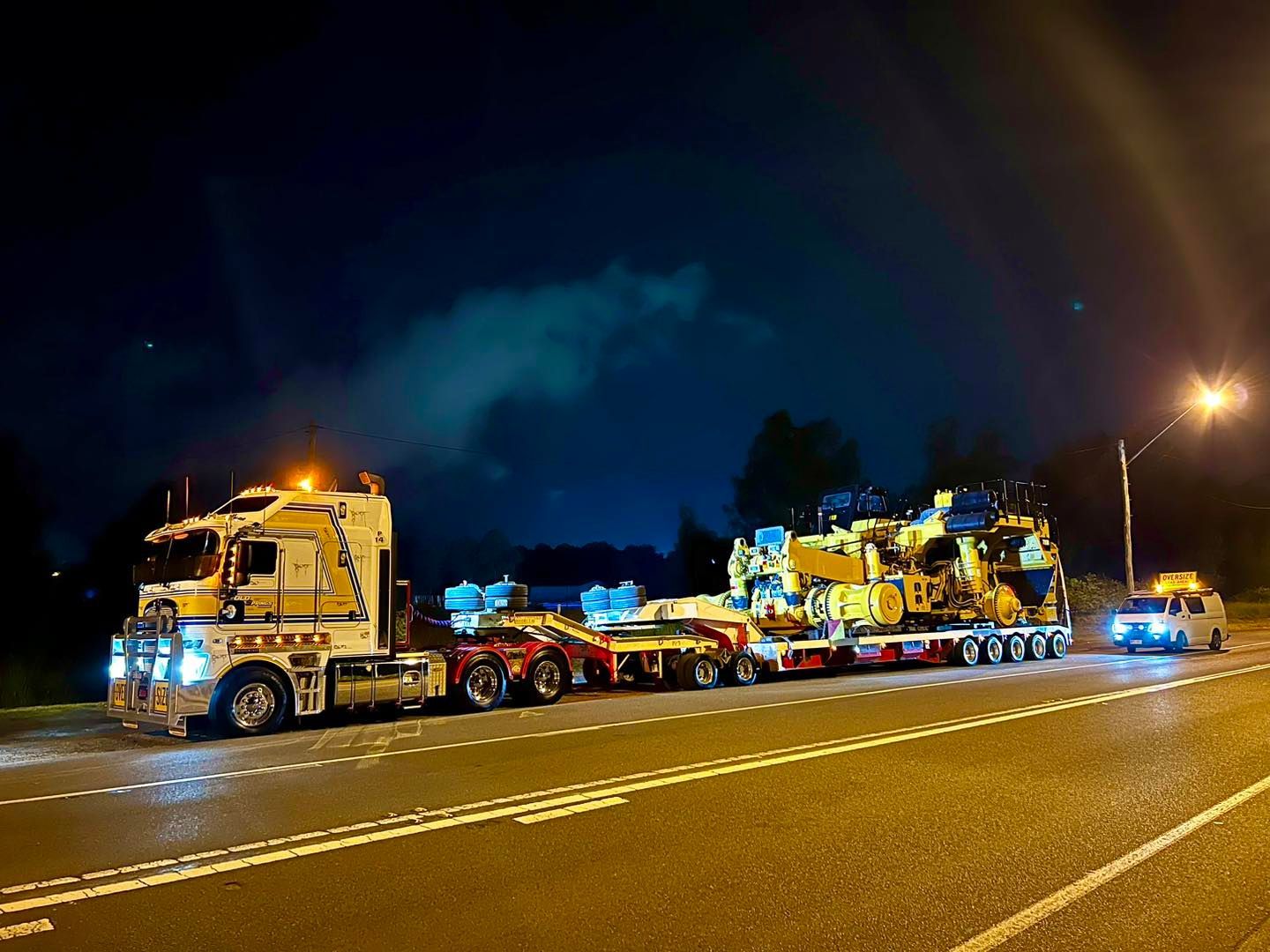
Routes are often optimised not for speed but for structural compatibility. A detour adding 50 kilometers may be preferable to risking a bridge rated for 50 tonnes with a 70-tonne load. Escort vehicles are deployed to manage traffic, communicate with local authorities, and respond to unexpected obstructions. In remote areas, satellite communication ensures continuous oversight.
Timing is equally critical. Many overmass movements occur at night or during low-traffic windows to minimise disruption. This level of coordination ensures that overmass transport proceeds with minimal public impact while maintaining load integrity.
Specialized Equipment and Operational Expertise
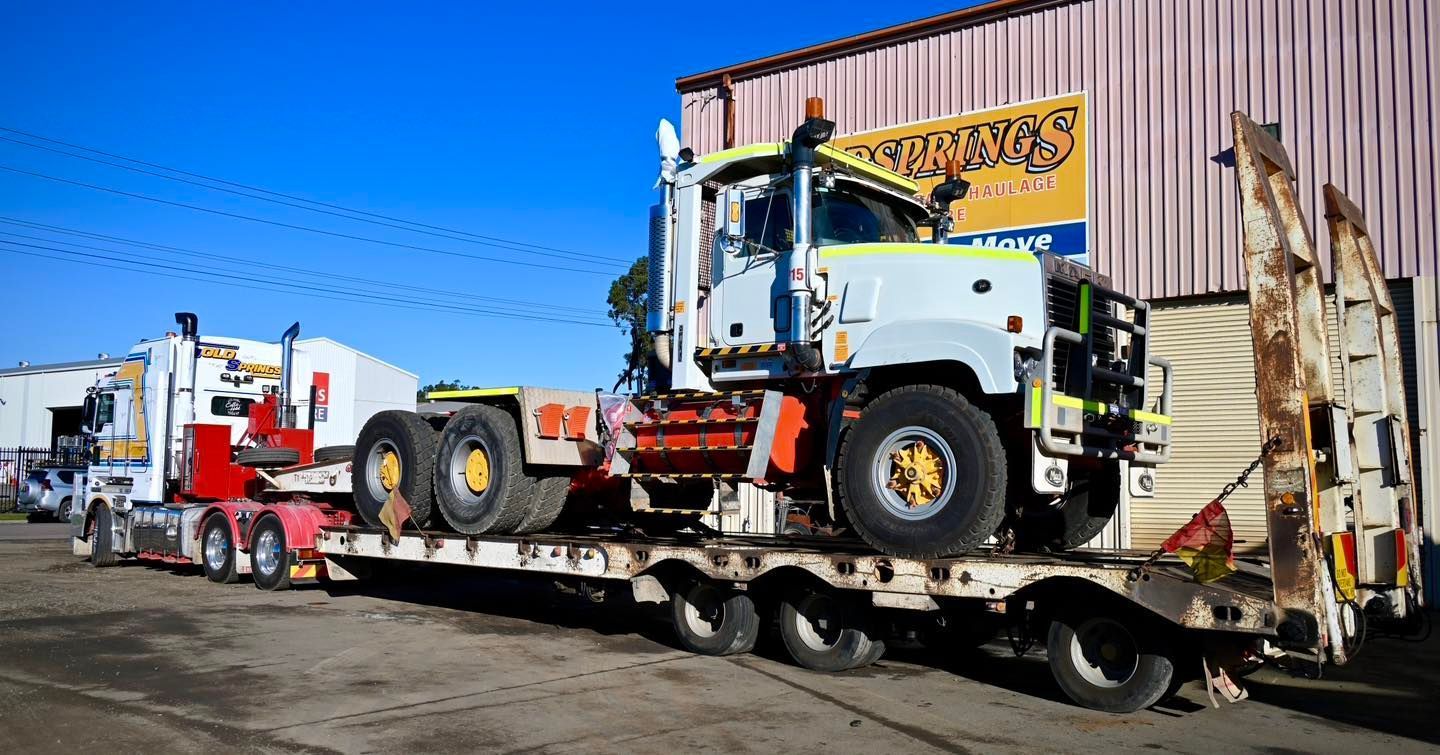
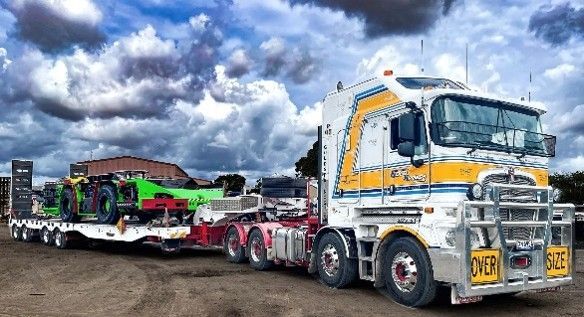
Not every heavy vehicle can legally or safely carry overmass transport loads. Companies deploy modular trailer systems—such as extendable hydraulic platform trailers and multi-axle dollies—that distribute weight across more contact points, reducing pressure on individual road segments. These configurations are engineered to comply with axle mass limits even when total mass exceeds standard thresholds.
Equally vital is the human element. Drivers undergo advanced training in heavy vehicle dynamics, load securement, and emergency protocols specific to high-mass operations. They must interpret permit conditions in real time and adjust driving behaviour accordingly—such as reducing speed on gradients or avoiding sharp turns.
This fusion of specialised equipment and certified expertise ensures that overmass transport in Australia is executed with technical rigour. It’s not merely about moving weight; it’s about moving it responsibly.
Overmass vs. Oversized Load Haulage
While often grouped together, overmass transport and oversized load haulage Australia-wide serve distinct regulatory purposes. Overmass is defined by weight exceeding legal limits; oversized refers to dimensions—width beyond 2.5m, height over 4.3m, or length exceeding standard combinations.
A load can be one, both, or neither. For example, a dense steel coil may be compact but weigh 80 tonnes—triggering overmass requirements. Conversely, a lightweight wind turbine blade may stretch 70 meters but weigh under standard mass limits, requiring only an oversized permit.
When both apply, dual permitting for overmass transport is necessary. This dual compliance increases complexity, but is manageable with experienced planners. Misclassifying a load can lead to rejected permits or on-road enforcement actions. Hence, precise categorisation is foundational to successful heavy haulage.
Our Services Wait for You
Overmass transport in Australia is a highly regulated, technically demanding discipline that sits at the intersection of engineering, logistics, and compliance. From initial permit applications to final delivery, every phase requires expertise that only dedicated heavy haulage providers possess. Whether moving industrial machinery, mining equipment, or energy infrastructure components, success hinges on meticulous planning, specialized assets, and unwavering adherence to national standards.
For businesses requiring reliable, compliant, and efficient overmass transport, Goldsprings Heavy Haulage offers proven capability and nationwide coverage.
Contact us to discuss your heavy freight requirements.